Benje's style hedge
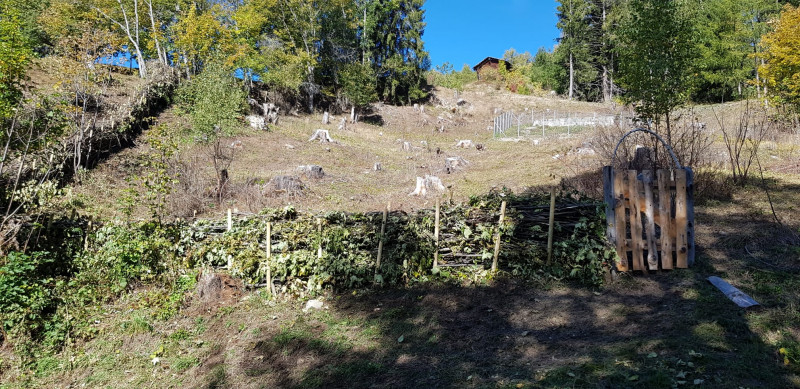
2019 – 2028With landscape conservation efforts, chain-link fences are being removed and replaced with living fences made of green clippings, so-called Benje hedges, at 4 locations along the Illgraben.
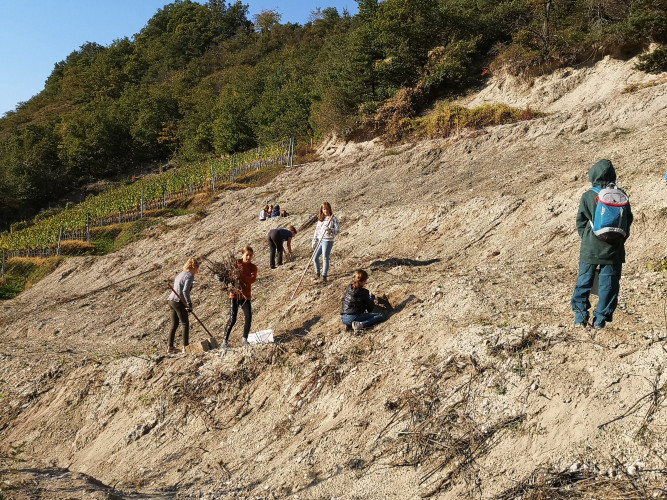
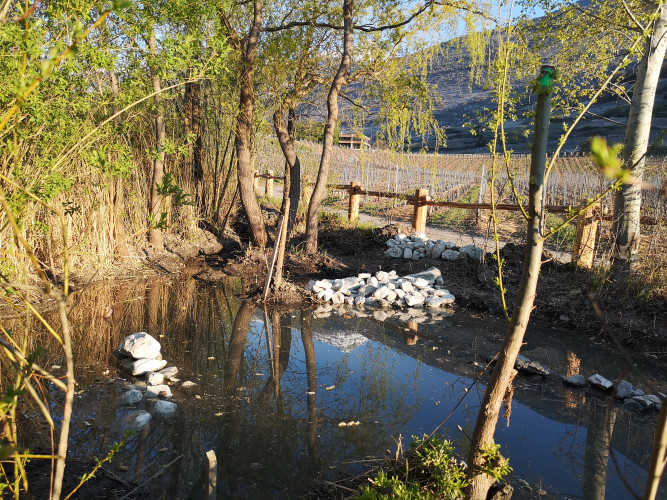
A multi-year school project for the ecological enhancement of the vineyard parcel is being implemented in collaboration with the community of Salgesch.
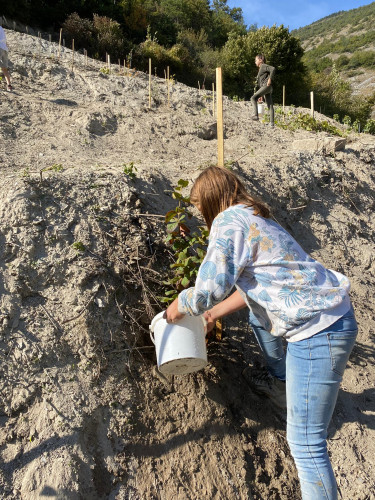
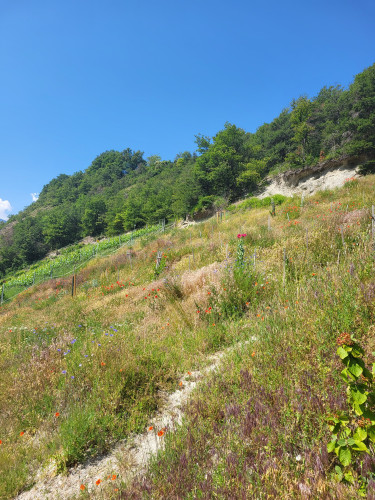
The pupils can experience the development of "their" plot from a monotonous vineyard to a paradise of flowers and animals. The measures already implemented include removing the old vines, terracing the plot to improve accessibility, planting native wild shrubs, young trees and standard fruit trees, sowing a native Valais dry meadow mix, creating a Benjes hedge and a wild bee hotel. Dominant problem plants are removed annually.
With landscape conservation efforts, chain-link fences are being removed and replaced with living fences made of green clippings, so-called Benje hedges, at 4 locations along the Illgraben.
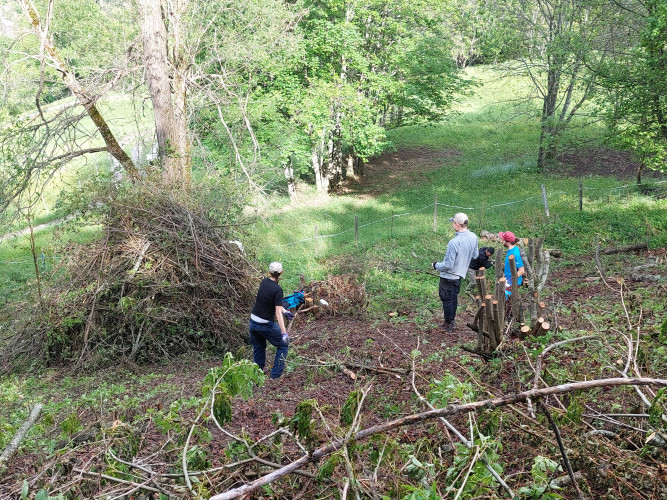
The renovations in Turtmanntal, Maiggen and Illalpe were carried out as part of landscape conservation projects. Community service groups and volunteers took part.
New habitats for plants and animals were created as ecological replacement measures for the SBB Salgesch Leuk double-track line extension. The Pfyn-Finges Nature Park maintains these hedges, dry meadows and wetlands on behalf of the SBB
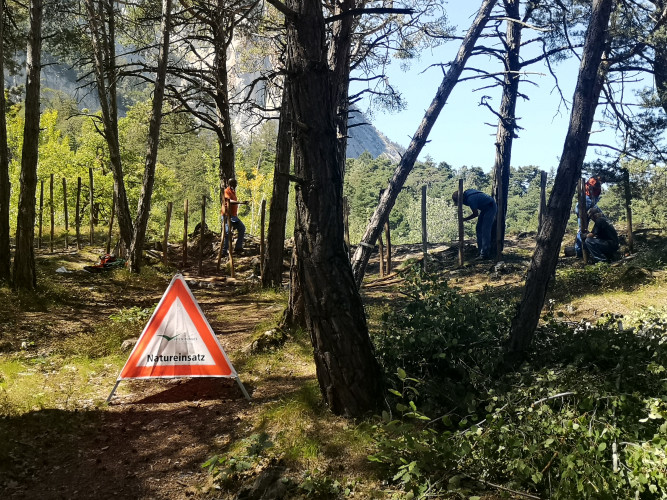
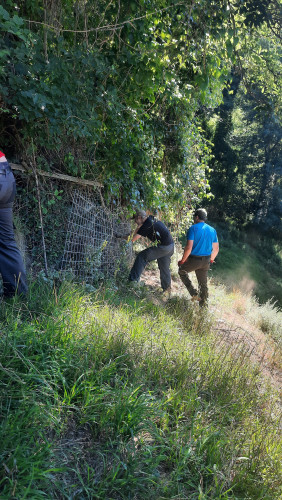
By removing wire pasture fences, the risk of injury to livestock and wild animals is reduced and at the same time the cultural landscape is visually enhanced. The old pasture fences are being removed as part of landscape maintenance operations.
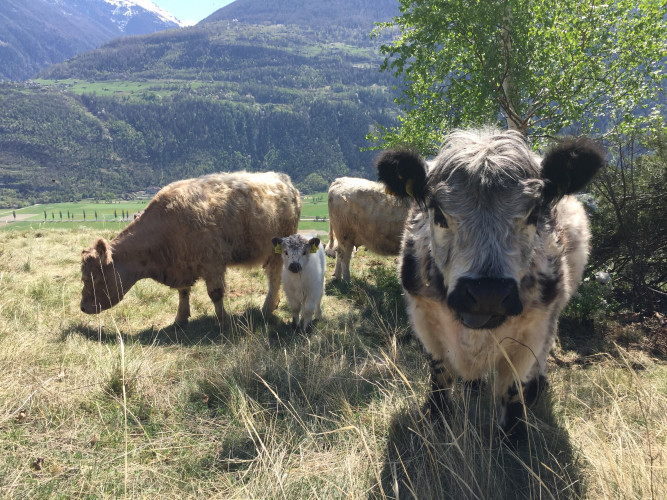
The Pfyn-Finges Nature Park manages the extensive grazing of the rocky steppe near Leuk with various animal species, coupled with manual shrub removal.
A Benje's hedge is a living fence and is made from green clippings. It offers habitat and shelter for small mammals and insects. This Benje hedge was created as part of a landscape conservation project.
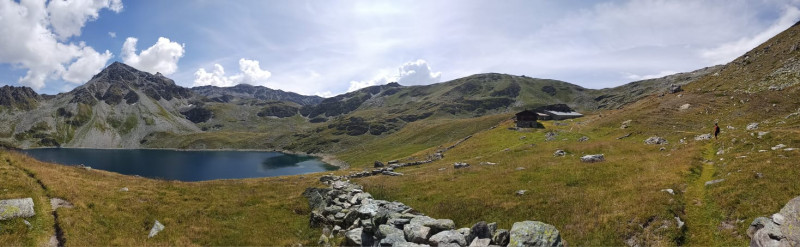
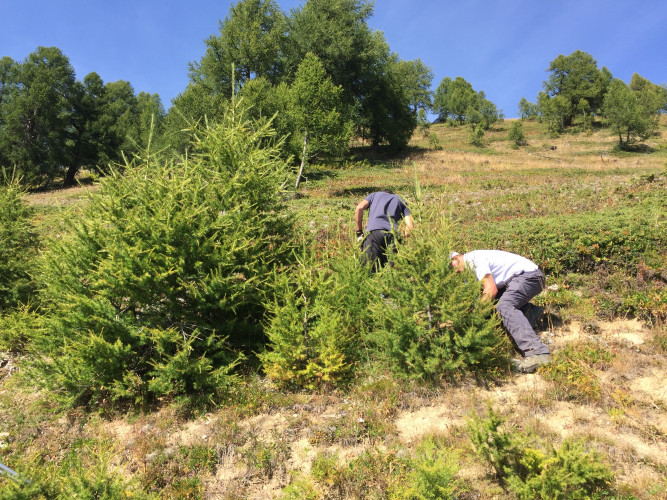
Interested school classes can spend a project week in the nature park area and help alpine farms with the ongoing work. On the Feselalp, fences were dismantled, pastures cleared of bushes and stones collected, among other things.
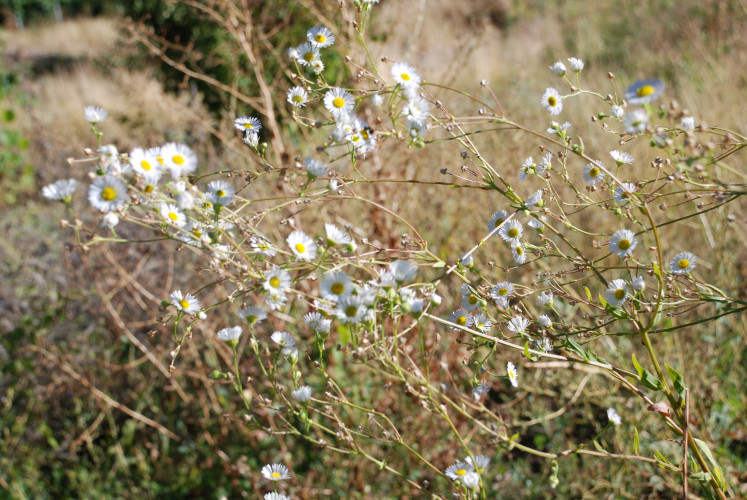
The removal of invasive neophytes to promote biodiversity is extremely important. Along the Meretschi stream, large stands of Butterfly bushes, North American goldenrod, Daisy fleabane and black locust were removed.
Together with the participants, heavily overgrown pasture areas were reopened, hedge structures maintained and old wire fences removed.